madeofdoors
A contemplative field guide

The Phenomenology of the DAG

Every edge is a door that locks behind you; this is what it is to be a creature made of doors.

The EssayThe VerseThe StoriesThe HaikuColophon
it only goes downhill
The essay

A felt poetics, held to technical exactness.

How to read this

The sections below form a dependency graph, not a list. Each one is a node; each builds only on what came before it, and the order is the only legal flattening I could walk that honors every edge. We start by meeting the object (Encounter), learn how it becomes visible (The look), then spend the longest stretch on the eleven verbs — the centerpiece, the widest tier — before descending into what it feels like to inhabit one (The felt core), where they are lived (In the hands), and finally what the whole calm structure cost to build (The tensions). Read top to bottom and you are following edges. The insights and questions at the end are the sink: every section drains into them.


1. Encounter — what a DAG is

A directed acyclic graph is, before anything else, a claim about time. Not clock time — something more fundamental: the impossibility of return. You draw an arrow from A to B and you are asserting that A precedes B in some irreversible sense. The word acyclic names an absence, and that absence is everything: no path leaving any node can circle back to visit it again. The figure has no memory of itself the way a cycle would require. It moves, strictly, forward.

That absence purchases something precise. A topological ordering always exists in a DAG — and exists if and only if the graph is acyclic. These are not two facts but one fact stated from opposite ends. What the topological sort hands you is not the ordering but one legal flattening of many; most real DAGs admit hundreds or millions of valid orderings, all superimposed, and any single sort collapses that superposition into one walked line.

Inside the figure, two substructures compete for your attention. A chain is a sequence where each node is reachable from the one before — a lineage, a dependency spine with no branching. An antichain is its opposite: a set of nodes in which no node can reach any other. The members of an antichain are mutually incomparable; they do not know about each other, and that mutual ignorance is exactly what makes them schedulable at once. The reachability relation — can A reach B by following edges? — is a strict partial order: irreflexive, asymmetric, transitive. The DAG is this order made visible.

So you are not introduced to a network. You are handed a flattened poset, a piece of frozen causation, and the first thing it asks is that you accept there is no walking it back.

2. The look — how we come to see it

A DAG in raw form has no shape at all. It is pure relation: nodes and directed edges, no position assigned to anything. The partial order exists before any drawing does. What makes it seeable rather than merely conceivable is the moment someone commits those relations to a plane and gives every node a place — and that commitment is not neutral. Most of what we call "the structure" of a pipeline or a build graph is really the structure of its drawing.

The reason DAGs look the way they do has a name: the Sugiyama framework, introduced by Kozo Sugiyama and colleagues in 1981. It is a layered-drawing pipeline, and nearly every tool that renders a DAG — Graphviz's dot, d3-dag, every CI pipeline view you have squinted at — either implements it or inherits its logic. It runs in four passes. Rank assignment sorts nodes into layers so every edge points one way across boundaries — this is the step that makes acyclicity visible. Crossing minimization orders nodes within each layer to reduce edge crossings; because doing this optimally is NP-hard, the framework leans on heuristics, most often the barycenter or median method. Coordinate assignment fixes absolute positions, aligning connected nodes and straightening long edges. Edge routing draws the long spans through the dummy nodes inserted earlier.

When those passes succeed, the drawing reads downhill: the eye enters at the sources and slides to the sinks without resistance. This is not a metaphor imposed on the figure; it is the perceptual consequence of consistent edge direction. And it cuts both ways. A tangle — crossings everywhere, edges stretched across many layers — reads as anxiety that is not metaphorical. The visual cortex genuinely labors to trace a crossing-heavy figure, forced into serial attention where the structure should have allowed parallel grasp. Cleanliness, then, is not decoration. It is a report on whether the dependencies are well-separated.

To see a DAG well is already to begin handling it. Which is the next move.

3. The eleven verbs

Here is the centerpiece — the widest tier of this graph, eleven incomparable nodes you may grasp in any order, though I lay them in Cruz's. Each is a way the hand meets the figure.

Encounter. What you meet first is not nodes or edges but a claim about irreversibility — the figure announces, before you read a label, that it moves one way and does not come home. To encounter a DAG is to feel acyclicity as a fact of the body: every arrow is congealed because, a fossilized decision that this had to precede that.

Use. You do not consult a DAG the way you consult a map — you run it, and it runs whether or not you understand it. In Make, in Spark, in a spreadsheet's hidden recompute, the graph is not a picture of the plan but the plan itself, the thing the system reasons over while you only touch a leaf or a root. To use a DAG is to discover the structure was load-bearing all along: change one value and the engine fans the dirty mark across the exact transitive closure, no more, no less.

Work with. Working with a DAG means negotiating with two measurements that answer to nothing you wish. Its width offers room — parallelism, hands you can add, an antichain wide enough to spread load across — and its depth refuses you, because the critical path is the longest chain and no quantity of help compresses a sequence whose every link must wait on the last. You spend resources against width; depth you can only endure.

Follow. To follow is to commit to a single legal flattening and walk it, knowing the DAG holds millions of others superimposed behind your one chosen line. A topological order exists precisely because the graph is acyclic — the two facts are one fact — but the sort reveals only that a linear reading is possible, never which is correct. Following collapses the superposition: your finger traces one honored sequence while the structure quietly keeps every other valid path.

Traverse. Traversal teaches that the same skeleton runs in two directions, and the direction is the meaning. The forward pass carries values down toward the sinks; the backward pass — reverse topological order, the chain rule accumulating at each node — carries sensitivities back up the identical graph. To traverse is to feel that a DAG is not a path but a reversible reading of an irreversible object: same structure, opposite grain.

Sense. Before you measure anything, you can see whether a DAG is sound, because a clean Sugiyama drawing reads downhill — the eye enters at the sources and slides to the sinks, antichains resting as legible horizontal bands. A tangle reads as anxiety that is not metaphorical: the visual cortex genuinely labors over a crossing-heavy figure. Sensing a DAG is letting calm and confusion become information.

Touch. When you reach into a DAG to touch one thing, you reach for the critical path — the spine that sets the floor on everything. It is the part that has hardened into fate: not how much there is to do, but how long the doing must take no matter how many workers you throw at it. To touch the critical path is to lay a hand on the one chain you cannot dig below.

Orchestrate. To orchestrate is to keep the frontier saturated — to ensure that at every instant, every node whose dependencies are satisfied is running, and no worker idles while work exists. Fan-out releases the whole ready antichain at once; the barrier holds until an entire tier resolves; the pipeline chains in series. Orchestration is not comprehension of the totality but the discipline of feeding a moving edge — the same scheduling problem whether the nodes are build targets, Airflow tasks, or inference calls.

Hold. The quiet truth is that you never hold the graph — you hold only its frontier, the set of currently-ready nodes whose predecessors are all done. That set is an antichain: its members are mutually incomparable, so you may grasp them in any order or all together, and as you complete each one it dissolves and exposes the rank behind it. You stand always at a waterline, never at the sea. What the figure offers your hand is forever the rim of the presently-possible — affordance, not grasp.

Encircle. You may want to draw a clean ring around a node — everything related — but the DAG forbids the circle, because a closed loop is exactly the cycle acyclicity rules out. What it grants instead is the cone: sweep every edge backward for the full set of ancestors, forward for all descendants, and you have the only honest encircling the structure permits. Relatedness here is directional — a node is bound to its causes and its effects but not to its siblings on the same rank.

Layer. To layer a DAG is to assign every node a rank so that all edges point strictly across boundaries in one direction — the move that makes acyclicity visible and the drawing readable. Strip every redundant edge first, keep only the transitive reduction — which, because the graph is acyclic, is unique — and the layered figure becomes a Hasse diagram: the transitive reduction drawn with edges oriented consistently toward their covers. Not a simplification but the identical poset wearing only what it must, every implied relation still present, encoded in transitivity rather than drawn.

Eleven verbs, and notice what they share: almost none of them is comprehend the whole. They are all ways of touching an edge, a frontier, a chain, a cone. That is not a limitation of the hand. It is the shape of the thing — which the next section is about.

4. The felt core

Run a finger along any edge and you feel the grain of it: the edge points. It is not a road but a one-way membrane — you may pass from cause toward effect, never the reverse. This is what acyclicity is to the body before it is a theorem: irreversibility made visible. A cycle would let you return to where you began, dissolving before and after into a smear; the acyclic condition forbids exactly that homecoming.

Stand at a node and look back along its incoming edges. Each is a sentence in the second person: I rely on you having finished. A dependency is not information; it is obligation. The arrow is a promise extended backward and a debt owed forward — the node cannot begin until its predecessors have made good. To wire an edge is to consent to wait, to stake your readiness on another's completion. A dependency graph feels less like a map than like a ledger of trust.

And here is the truth that organizes all eleven verbs: you never hold the graph, only its frontier — the set of nodes whose dependencies are all satisfied, the doable-now. It is an antichain, graspable in any order or all at once, and it advances like a shoreline as you complete what sits on it, each finished node dissolving to expose the next rank. The figure's vastness is real but unhandled.

Against that frontier, lay two measurements and feel how differently they land. Width — how many nodes the frontier can hold at once, the size of the widest antichain — is breath. A wide DAG forgives; it offers parallelism, places to put more hands. By Dilworth's theorem, that maximum width equals the minimum number of chains needed to cover the whole order, so width is literally how many independent threads of doing the figure permits at all. Depth is the opposite sensation. The longest chain — the critical path — is the incompressible spine, the sequence no help can shorten, because each link must wait on the last. Width you spend resources against; depth you only endure. You feel width in the shoulders, as room; you feel depth in the chest, as duration you do not get to negotiate.

And when you want to encircle a node — to ring "everything related" — the DAG refuses the circle and grants the cone: backward for all ancestors, forward for all descendants. Every node is the apex of two cones, narrowing to a point at the present, flaring into accomplished history behind and unspent consequence ahead. For causal reasoning this is exact — the set of nodes reachable from an event is its future light cone. To hold a node fully is to feel both at once: the weight of all that had to finish so it could begin, and the reach of all that now waits on its being done.

This is the felt core. Where it gets lived is the workbench.

5. In the hands

There is a difference between knowing a structure and having it in the body. The DAG earns the second kind of knowing through repeated collision — the build that breaks because you closed a loop, the pipeline that hangs on its critical path while parallel lanes sit idle.

In build systems, the graph is the plan. GNU Make reads your rules, builds a dependency graph, and topologically sorts it so each target is built only after its prerequisites; Kahn's algorithm repeatedly extracts a node of in-degree zero, and if none exists, a cycle has been found and Make stops — a hard error, because there is no valid order for a graph that contains one. Bazel makes it explicit: its analysis phase constructs an action graph, and incremental builds re-execute only the affected subgraph after diffing against a cached prior one. You feel it when you touch a leaf — fast, nearly instant — versus a root, where the whole transitive closure fans out.

In dataflow and scheduling, the DAG is what the system reasons over, not what you execute. Airflow defines workflows as Python DAG objects and dispatches each task once its upstream dependencies reach success. Dagster uses the same structure but makes the data assets the nodes, so the graph is a lineage map as much as a plan. Spark builds a DAG of transformations lazily — .filter(), .join(), .groupBy() execute nothing — and when an action fires, Catalyst collapses redundant stages and pushes filters toward the sources before any data moves.

In version control, history is a frozen braid. Every commit is a node; its parent pointer is an edge pointing backward in time; the graph is acyclic because a commit cannot be its own ancestor. A merge commit is a node with two parents. Rebase replays commits as new nodes on a different ancestor, rewriting object hashes because the parent hash is part of each commit's hash. git log --graph draws the commit graph with only those parent (cover) relations, the transitive edges already absent by construction.

In automatic differentiation, backprop is a reverse traversal. The forward pass builds a computation graph and caches activations; .backward() walks that graph in reverse topological order, applying the chain rule at each node. Forward for values, backward for sensitivities — one structure, two grains.

In spreadsheets, the DAG is hidden but real. Every formula cell is a node, every reference an edge; change a value and the engine recomputes downstream cells in topological order, each once, each after its inputs. A circular reference is a cycle, detected and refused — Excel raises a circular-reference warning rather than silently computing; Google Sheets shows #REF! with a circular-dependency message. The user who never heard of a DAG has been operating one for years.

And in agent orchestration — the work Cruz does daily — the same structure governs swarms. Independent tasks form an antichain; fan-out dispatches the whole ready frontier, the barrier holds until a tier resolves, the pipeline chains in series. The floor on wall-clock time is the critical path, and no parallelism shortens it. The job is to keep the frontier saturated: every task with no unsatisfied dependency actively running, no agent idle while work waits.

Every habitat teaches the same lesson from a different angle. Which raises the question the calm conceals.

6. The tensions

Every lens so far describes the DAG as a thing you find — a terrain to walk, a poset to render, a cone to inhabit. None of that is wrong. But it omits the violence at the origin. A DAG is not what the world hands you; it is what remains after you cut the cycles out of it. The acyclicity that buys you a topological ordering is not a property the system possessed. It is a property you imposed, with a blade.

Look at where real DAGs come from. The build graph is acyclic because someone forbade circular imports. The git history is acyclic because rebase rewrote the braid until it lay flat. The Spark lineage is acyclic because you froze a snapshot of a computation that runs again tomorrow on new data. The Airflow DAG models a pipeline that loops daily — the loop is the real object; the DAG is one day of it, unrolled and pinned. The downhill calm those drawings radiate is the serenity of an amputated feedback loop. It reads as peace because the thing that could have argued back has been removed.

This is why the circular-dependency error deserves to be heard as more than a failure. When Make halts because Kahn's algorithm finds no node of in-degree zero, when a spreadsheet throws its circular-reference flag, the categorical refusal is not the system protecting you from a mistake. It is the system reporting that life was never acyclic in the first place. A → B → A is not a bug; it is your graph confessing that A and B were always co-determined, each waiting on the other the way revision waits on the draft that waits on the revision. Sometimes the cycle is the most honest edge in the diagram, and "break the cycle" means choose which half of a real interdependence to pretend is prior.

There is a quieter cost, and it falls hardest on exactly the work the praxis lens celebrates. To build a DAG you must assert, for every pair of nodes, either this precedes that or these are incomparable. But many real relationships are neither. Two considerations that genuinely temper each other — budget and ambition, safety and speed, the Spanish string and the English one it is not a translation of but a sibling to — have no fact of the matter about which comes first. Force them onto a DAG and you have manufactured a precedence that does not exist, then optimized a critical path through a fiction. The antichain is the form's honest gesture here — it admits some nodes simply do not know about each other — but it still demands mutual ignorance as the price of equality. It cannot hold two things deeply coupled in both directions and still co-equal. That relation has a name, and the name is cycle, and the DAG has defined it as the one thing it cannot contain.

So, the honest answer. Reach for a DAG when the irreversibility is real — when A genuinely must finish before B begins, when the arrow encodes a fact about the world and not just your scheduler. Build systems, gradient tape, commit history, causal inference: here acyclicity is discovered, and the form fits like skin. Do not reach for it when the loop is the phenomenon — negotiation, homeostasis, ecology, learning, any system where each party adjusts to the other's adjustment. Model those as DAGs and you produce a beautiful, legible, downhill-reading artifact that has quietly deleted the only dynamic that mattered. The DAG's gift is that it cannot loop. That is also, exactly and inseparably, its lie.


Insights

The acyclic graph is not discovered in the world but cut from it — every DAG is a feedback loop with the return path amputated, and its famous calm is the silence of the thing that could have argued back.

You never hold a DAG; you hold its frontier — and almost every verb worth naming (hold, orchestrate, touch, encircle) is a way of meeting an edge, never the whole, because the whole was never the unit of contact.

Width is breath and depth is fate: parallelism is the one you spend resources against, the critical path is the one you can only endure — and Dilworth's theorem is the exact exchange rate between them.

Acyclicity and the existence of a legal ordering are one fact stated from two ends; the topological sort proves only that a reading is possible, never which one is true.

The circular-dependency error is the single moment the DAG stops pretending — it is the structure confessing that two things were always co-determined, and "break the cycle" always means choosing which half to call prior.

Open questions

  1. When you orchestrate agent swarms, which edges are discovered irreversibility and which are imposed for the scheduler's convenience? If some "dependencies" are really co-equal siblings you flattened to make the graph run — the way es/ strings are siblings to en/, not descendants — does naming them as a forced antichain, rather than a true precedence, change how you'd wire the swarm?
  1. Where in your daily work does the loop being the phenomenon get silently deleted by the DAG that models it? Your strategy work is full of feedback — pricing tempers ambition, which re-tempers pricing — yet build-DAG tooling wants a partial order. Is there a place you've been forcing a critical path through a fiction, and would a cyclic or control-loop model actually serve it better?
  1. If the only thing you ever truly hold is the frontier, what would change about how you design dashboards and orchestration views — to show not the whole graph (the affordance you can never grasp) but the moving waterline of the presently-ready, sized by width and shadowed by the critical path behind it?
The verse

Because

A river does not remember
being rain in my hands.

You set the kettle down,
turn the burner blue,
and from that moment forward
there is no version of the room
where the water is cold again
and the match unstruck.

I used to think the past was a place —
a porch, a kitchen, a held hand —
somewhere I could be returned to
if I only walked back far enough.

It is not a place.
It is a direction the body took
and cannot untake.

Look:
here is the polaroid with your penmanship,
the small fixed face of our smiles,
already deciding everything
that will be true of me.
It does not know it is deciding.
It only knows the light.

Each moment I thought was over
became a wall behind the next memory,
soft when I passed through the vale,
stone before I could even recognize.

This is not cruelty.
It is only the shape of after.
The kettle ticks as it cools.
I will never be the one
who has not yet
made the tea.
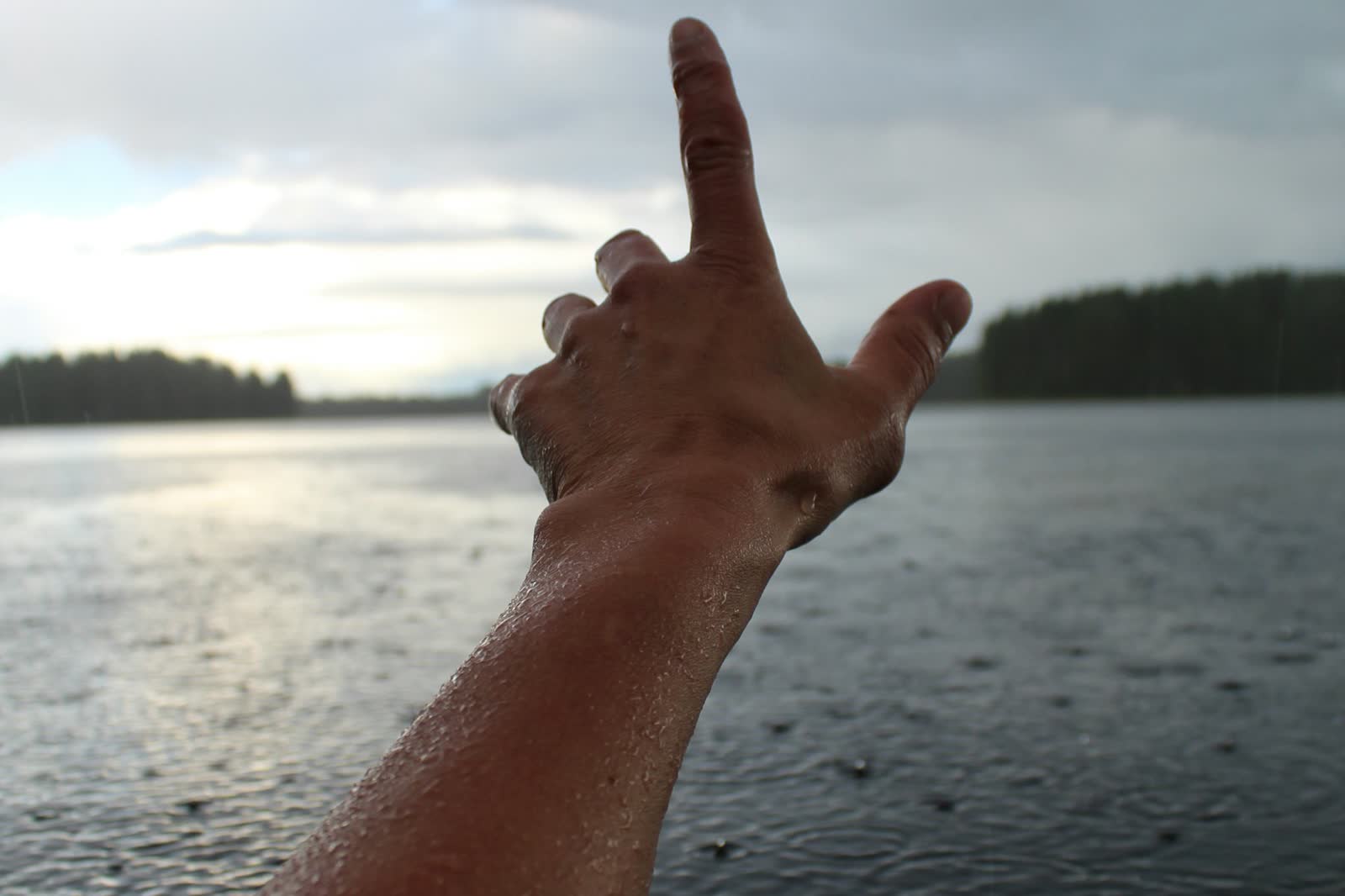
What the Hands Can Reach

You think you are holding the day.
You are holding the rim of it.

Behind the rim: living machinery,
ten thousand things that must be true
before a single one of them
will let you touch it —
the bread that needs the flour
that needs the earth
that needs the rain
that fell before your grandmother.

You cannot grip all of that.
No one can grip all of that.
What you get is the shoreline of the inland sea —
the thin bright line
where the doable
laps against the not-yet.

I have spent whole years
grieving the country I could not enter,
the dry interior of everything unfinished,
when the only honest place to stand
was here, at the wet edge,
where the next thing
had just become possible
and was asking, in the plainest voice,
to be picked up.

Not the map. Never the map.
The waterline.
The little that the tide,
just now,
hands you a choice.
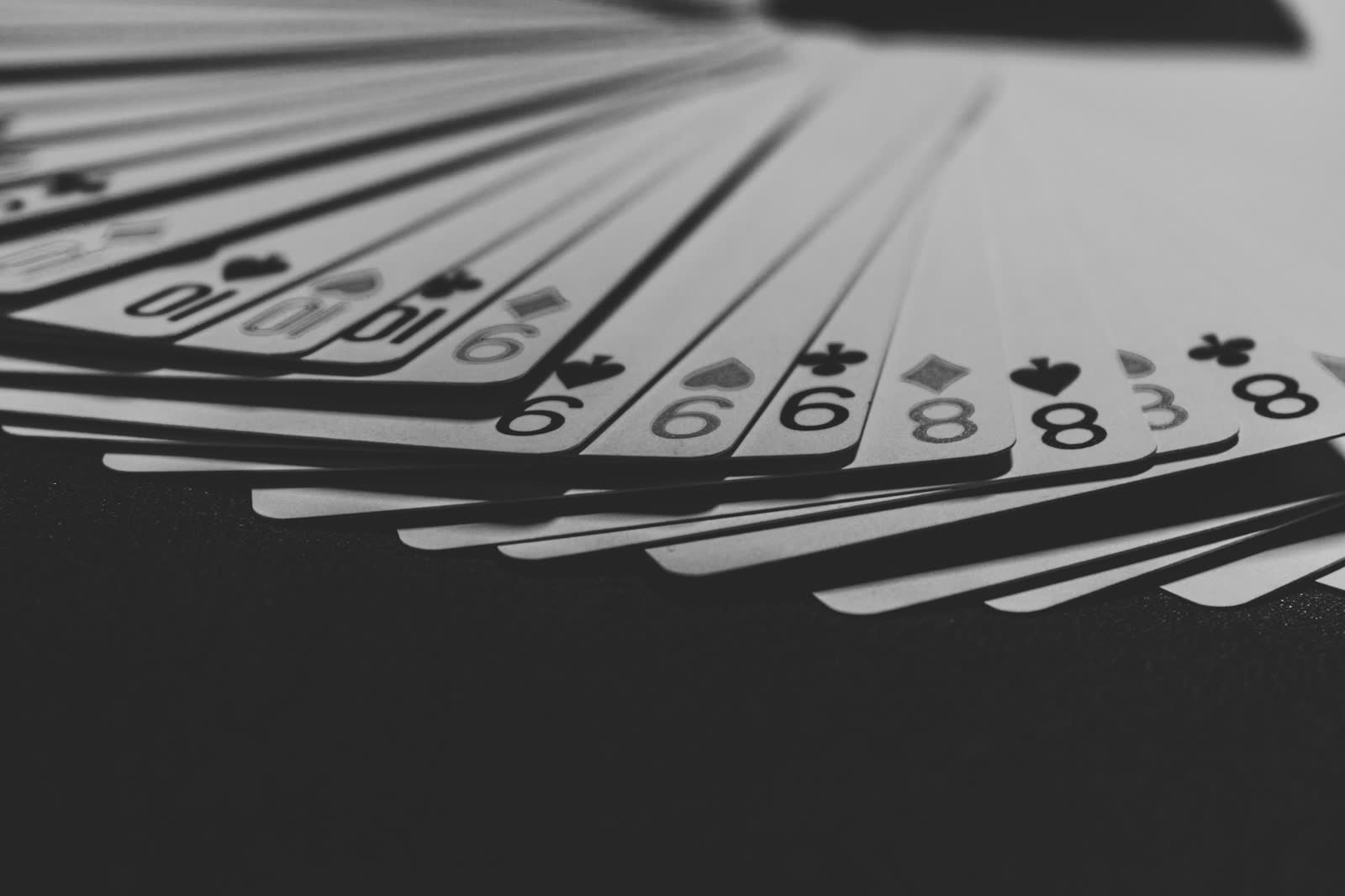
Breath and Spine

Some days are wide.

While we are breathing and working
time fans out like a hand of cards
and a dozen things can happen at once —
the bread rising while the documents are written
while the paint dries while the child sleeps —
and the width of the work
it is breadth,
it is room,
it is the lung of the day filling,
the luxurious arithmetic of meanwhile.

You spend it. You spend against it.
You pour more bodies, more hours, more hands
into the wideness
and the wideness drinks them
and the day goes faster
or seems like it is going faster.

But under the width there is a spine.

There is one chain of things
that must come one-after-one-after-one,
no two of them allowed to share a breath,
the dough that must be made
before it rises
before it bakes
before it cools
before it's bread —
and no crowd you summon,
no army of helping hands,
can fold that line any shorter.

That is depth.
That is fate.
You cannot spend it.
You endure it,
the way you endure your own height,
your own insomnia,
your own hand linked to the
long single thread the day
tweezes and spins in its hands.

And here is the quiet law
nobody says aloud:
the widest moment you will ever have —
the most energy that flows at once —
is exactly the fewest threads
it takes to cover the whole.

Width bought at the price of handfuls.
The day will tell you the exchange rate.
It is never in your favor
and it is never a lie.
The Only Honest Circle

You wanted to come full circle.
Everyone does.
To end where you began,
to close the ring,
to say and so I returned.

This shape forbids it.
A circle here is against the grain —
a road that arrives at its own beginning
is a road that never lets you leave.
It will not allow
a single step that loops you home.

An honest offer — for another shape.
Not the ring. The cone.

Behind you, widening into the dark,
everything that made you:
every cause, every parent of a cause,
the fanning backward country of before,
all of it is yours, all of it spent,
the gathered fuel of your one position.

Ahead of you, widening into the dark,
everything you will ever touch:
the fanning forward country of after,
the reachable, the affectable,
the long shadow of the moment named now
every later bound to it

Two cones, meeting at a point,
and the point is you.
Not encircled —
hinged.
The apex where the gathered-behind
becomes the scattering-ahead.

This is the only honest way
to be surrounded by your life:
opening both directions from the one lit place
you are standing,
which is called now,
which is called here,
which is the only door
the cone leads to around.

What the Cycle Confessed

The machine stopped and printed its one true sentence:
circular dependency.

For a thousand cycles it had lied politely,
pretending this came first and that came after,
pretending the cause stood cleanly upstream of the caused,
pretending the world was a stair and not a knot.

And then two things looked at each other
and each said you first
the hen needing the egg needing the hen,
the meaning needing the word needing the meaning,
the trust that must be earned by the closeness
that only trust allows —
and the machine, which cannot hold
two things that make each other,
threw down its tools and confessed:

*these are not parent and child.
these are twins in a single womb.
I cannot tell you which one
taught the other how to be.*

We call the fix breaking the cycle
as if we were repairing something.
We are not.
We are choosing.
We take two things that grew up entangled,
that co-authored each other in the dark,
and we cut the loop
and we name one of them first
and we make the other wait —

a small violence, dressed as logic,
a decision wearing the mask of a discovery.

The error was the only moment
the structure ever told the truth:
that some things do not come in an order.
That some things simply
arrive together,
holding hands,
refusing to say
who knocked.
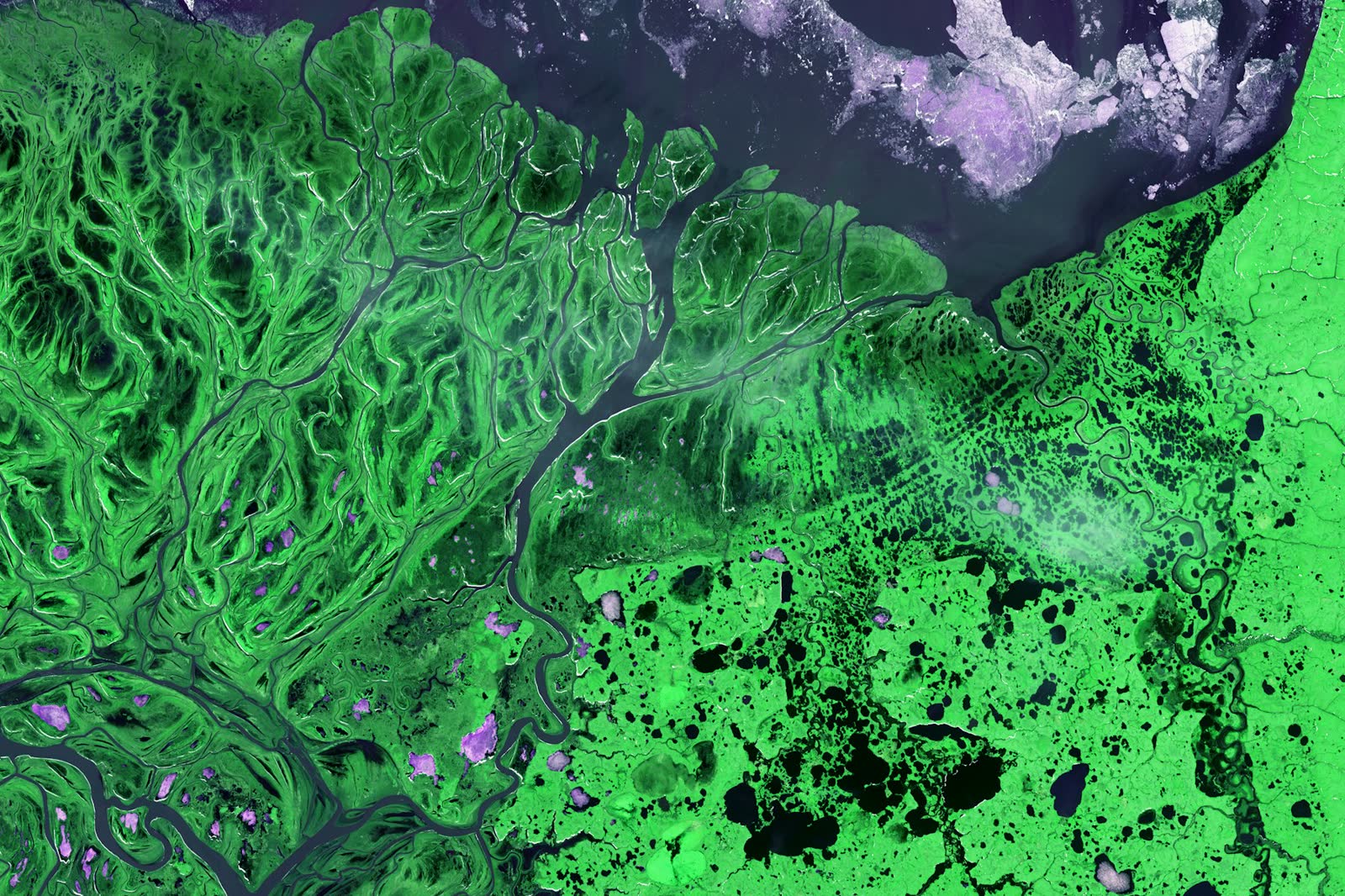
Two Parents

A child can have two parents —
this the structure allows,
even welcomes:
the merge,
the place where two histories,
having run apart for a season,
each sure it was the only river,
arrive at the same low ground
and braid.

Two pasts feed one present.
Two streams of what happened
pour into a single now
and from here downstream
the water is from both
and you could not, if you tried,
sieve one rain back out of the other.

This is the tender thing the shape gets right.
It knows that we are confluences.
That a life is where some mother's line
and some father's line
and the line of every choice
stopped being separate.

But there is a darker hand it has.

It can take the past and rewrite it —
lift a deed off its old foundation,
set it down on a different one,
and call it the same deed
though everything beneath it changed.
And every name downstream changes with it.
Everything that pointed to the old thing
now points to a thing that was never there,
and the work goes on, unknowing,
built on a foundation quietly swapped
while it slept.

We do this. We call it cleaning history.
The new line is tidier.
It reads as though the mess never happened,
as though the road had always run this straight.
And the old commits, the true crooked ones,
drift off unreferenced into the dark,
fathered by no one now,
still real,
still where we actually walked,
pointing at a past
the record has agreed to forget.
The Two Siblings

Here is agua. Here is water.

Tell me which one came first
and I will know you do not have
two languages in your mouth.

The structure asks me to choose a parent.
It can hold this, then that
it is fluent in then
but it has no grammar for also,
no edge that means and equally,
no line you can draw
between two things
that says: neither of these
gave birth to the other,
they are the same weight in different air,
they are a thing and its own reflection
where you cannot say
which side of the glass is the real face.

So it does what it always does
when handed something it cannot hold.
It forces a stair where there was a level floor —
makes one word the elder,
makes the other wait its turn,
quietly demotes
my grandmother's tongue
to a translation of the one
that got there with the paperwork.

Or it sees the truth —
that each word leans on the other,
that agua means by meaning water
and water means by meaning agua,
each one the other's echo and its source —
and it panics,
calls it a loop,
calls it the forbidden thing,
and refuses the pair entirely
rather than admit
that two things can be co-equal
and neither one the root.

This is the shape's one real poverty.
It can do because.
It cannot do beside.
And I, who am two languages
standing level in one body,
neither half the parent of the other half,
am a sentence
it can only mangle into a line
or throw away
as a circle
it was never built
to let me close.
The Garden of One Path

There was never one way to do it.
That is the first mercy and the last cruelty.

The morning held a hundred legal orders —
coffee then the letter, or the letter then the coffee,
the call returned before the bread or after,
each sequence true, each one allowed,
the day a fan of every way it could be spent
held closed in your hand like cards face-down.

Then you moved.
And moving is choosing,
and choosing is closing the fan to a single card.

Not because the others were wrong.
The others were just as legal.
You will never know which order
was the one you were meant to walk,
because the day keeps no key —
it only certifies, after,
that what you did could be done.

The unwalked orders do not die.
They stay, transparent, laid over the real one,
the thousand mornings inside the morning,
the letters never written first,
the calls returned in a different light.
You walk your one line through the garden
and feel them part around you like tall grass —
all the paths that were also true,
that you were also free to take,
closing without a sound behind your single step.
Source

Every arrow comes from somewhere
except the first ones.

Follow the edges back —
this needed that, that needed the other,
the bread through the flour through the field —
and you expect it to go on forever,
cause behind cause behind cause,
the comfort of an explanation
that never has to end.

It ends.

There are things with nothing behind them.
No parent. No reason pointing in.
The spring no river feeds.
The first word of the language.
The grief that did not come from anywhere
you can name, that simply was there
one morning, sourceless, already running downhill.

We hate them a little, the uncaused.
We keep asking what made them,
because a thing with no upstream
feels less like a beginning
than like an orphan —
something that should have a hand behind it
and does not.

But the whole graph hangs from these.
Everything with a reason
traces back to something with none.
Even the most explained life
begins in a place
that nothing explains.
Sink

To be a sink is to have nothing waiting on you.

All your life the arrows ran outward —
someone downstream of your finishing,
a child, a deadline, a field that needed your rain,
the next thing that could not begin
until you were done.
You were always somebody's before.
You were always being waited for.

And then: a place where the arrows only arrive.
Nothing leaves. Nothing depends.
The buck, at last, stopping —
not because you failed to pass it
but because there is no one downstream to take it.

It looks like death and isn't, quite.
It is the bowl at the foot of the fountain
that every tier above has been falling toward.
It is the last line of the proof.
It is the night the list is finally,
impossibly, done —
and the strange grief in that,
that no one needs your next move,
that you have become a place things end
instead of a place they pass through.

The whole graph was draining toward this all along.
Every spring, every fork, every braid
was water looking for the lowest ground.
You are the lowest ground.
You are what the long fall was for.
Rest here. Nothing is waiting.
That is the terror, and the whole of the peace.
What May Be Left Unsaid

You can take a drawing thick with lines
and rub out almost all of them
and lose nothing.

If this leads to that
and that leads to the third thing,
you do not need a line
from the first thing to the third.
It is already there.
It travels. It arrives without being drawn.

This is the kindness of an old marriage:
how much can go unsaid
because it is implied by all that is said,
how the long way round
makes the shortcut not worth mentioning,
how pass the salt
can carry thirty years it never names.

Strip a life to its covering relations —
only the nearest, only the must —
and the whole of it is still inside,
every far consequence
still reachable, still true,
only no longer spelled.

The smaller drawing is not the smaller life.
It is the same life, learning at last to trust
that what follows will follow
without being told to.
The lines you erase
are the ones you have earned the right
to leave silent.
The Long Edge

To draw a line from here to someone far
the picture cheats, tenderly.

It cannot leap the distance clean —
too many ranks between your layer and theirs,
too much in the way —
so it invents a chain of ghosts,
one in every level it must cross:
invisible stations, placeholders,
that hold no thing
except the passing-through of the line.

No one sees them.
They have no name, no value;
nothing depends on them but the reaching itself.
Their whole existence is to carry
your one far edge across the gap
so that two distant points can be shown
to be, after all, connected.

I think of everyone who was a ghost like that
in some love that was not theirs —
the friend who carried the message,
the years that only existed
to get me across to you,
the long stretch of a life
whose only content was conveyance.

Not every place is a destination.
Some are only how the far things
manage to touch.
And the line, when it lands,
looks direct.
It never shows the ghosts it walked through
to arrive.
Rank

Your place in the order
is not how soon you might have arrived.
It is how late the longest road
that made you
finally got here.

They set your layer by the longest path —
not the shortcut, not the quickest cause,
but the most patient chain,
the one that went all the way back
through every slow prerequisite
and refused to hurry.

So this is what it means to stand where you stand:
some short line could have reached you early,
but you are dated by the long one.
You are as deep as your oldest debt.
The morning is young by the clock
and old by the bread,
which is old by the wheat,
which is old by a rain
that has been falling toward this kitchen
for a hundred years.

No one is shallow who is reachable
by a long enough road.
You wear the age of the oldest thing
that had to happen first —
standing exactly as far in
as your longest inheritance reaches.

The One Who Keeps the Frontier

Her whole art is this: let nothing ready wait.

Find what has no unfinished thing before it —
owed nothing, blocked by nothing,
clear to begin —
and begin it. Then the next.
The doing of it unlocks
two more that could not start until now,
and those unlock others,
and the work proposes itself to her
one freed thing at a time.

She does not hold the plan.
The plan is too large, and anyway
she has learned the plan lies about order.
She holds only the question, asked again each moment:
what can be done now
that could not, a breath ago?

This is not the lesser thing, beside vision.
It is the harder, humbler faith —
to trust that tending only the ready edge
will, in its own time, empty the whole reservoir;
that you need not see the end
to be the one who brings it;
that a finished task is not a finish
but a key
turning in a lock
you could not reach until your hands were free.

Idle hands, with work undone — the only sin.
Everything else, the size of it, the dark ahead,
is not hers to carry.
Hers is the moving line:
the freed, the ready, the now-possible,
fed and fed and fed
until the last of it empties
and there is, at last,
nothing left that anything is waiting for.

The stories

The Wrong Side of the Lake

the arrow that does not return

The realtor had wanted to meet at the property, but Dolores said no, the diner on County M, the one with the lake out the window, and the woman agreed because people humor you when you are selling the house you were born in.

Dolores got there early. She always had. Forty minutes early to her own wedding, her father used to say, and forty minutes early to his funeral too, sitting in the cold car in the church lot watching the hearse not arrive yet. She took the booth by the window. The lake was the color of a nickel. On the far shore, screened by birch gone bare for November, was the house — you couldn't see it, but she knew the exact angle, the way you know where a tooth used to be.

She ordered coffee and didn't drink it.

The thing nobody told you was that it happened in increments so small you could not feel any single one. Her mother had said, we'll seed the back field in spring, and then it was a different spring, and then her mother was a woman who could not remember the word for field. Her father had said, when you're older I'll teach you to read the ice, meaning the lake, meaning which gray was safe and which gray was water wearing a coat, and he had taught her, one winter, and then there were no more winters where he was the one holding the auger. You went through a door. You did not feel it as a door. You felt it as a Tuesday.

The realtor was nine minutes late, which Dolores forgave instantly because she was kind-faced and had a folder.

"It shows beautifully," the woman said. "The light in that kitchen."

"East-facing," Dolores said. "My mother painted it three times. Yellow, then a sort of green, then yellow again."

She did not say: the second yellow was not the first yellow. You could not get back the first yellow. Her mother had tried, had stood in the paint aisle in Wausau with a chip in her hand, and the man had mixed it, and it had gone on the wall and dried two shades wrong, because the wall was older now and drank the color differently, and her mother had cried in the kitchen over a thing so small that Dolores, sixteen, had been embarrassed for her. She understood it now. It was not about the paint. It was that you could repeat the action and not repeat the result. The same brushstroke landed in a different world.

"There's some deferred maintenance," the realtor said gently, turning a page. "The dock. But for the lot, for the frontage —"

"My brother built that dock," Dolores said.

He had built it the summer he came back from the first tour and before he left for the one he didn't come back from. She had handed him screws. She had been the screw-hander, eleven years old, the most important job in the world, and he had said you're killing it, Dee, and she had glowed for a week. The dock was still out there, grayed and listing. You could walk it. You could stand at the end of it where he had stood. You could not be eleven, and he could not be twenty, and the screws she had handed him could not be unhanded.

That was the whole of it, she thought. That was the entire machinery of a life. Every act laid one more board you could walk out on but never pull back up. You added and added. The dock only ever got longer. It never, not once, got shorter toward the shore where you started.

"Mrs. Kowalczyk?"

"I'm sorry."

"I asked if you'd be at the closing in person, or if we'd handle it remote. Some folks find it easier remote." The kindness again. The woman had done this before, sold the houses of the old to fund the rooms where the old went next. She knew where the grief sat.

Dolores looked at the lake. A single fisherman was out in a boat too small for the cold, a dark stitch on the nickel. She thought of how the realtor had offered remote, as if distance were the mercy, as if the problem were the room and not the year. As if she could sign in Madison and the house would still be a place she could return to, instead of a place that had already, quietly, over decades, become unreachable while she lived in it.

You could go back to the property. That was the cruelty people missed. The lot would be there. The drive would crunch the same under the tires. She could stand in the east kitchen in the wrong yellow. But the house she wanted was not a place. It was a when. It was her mother saying spring and meaning a spring that would arrive with her still in it. It was the screw-handing summer. And there was no road on the earth that ran backward into a Tuesday.

"In person," Dolores said. "I'll be there in person."

Because if you could not go home, you could at least go to the door, and stand at it, and put your name to the last board, and walk back up the dock you could only ever walk down — knowing the shore behind you was not a place you were leaving but a place that had already, gently, with no single moment to blame, finished being yours.

The coffee had gone cold. She drank it anyway. It tasted like every cold cup she had ever let sit, which is to say it tasted like being early, like being the one who arrives before the thing arrives, which she had been her whole life, and would be, she understood now, even for this.

"It really does show beautifully," the realtor said again, because there was nothing else to say, and Dolores nodded, and across the lake the house she had already lost held its east light out to a kitchen where no one was standing.

Saturday, the Rim of the Pass

the moving waterline of the presently-doable

Eleven tickets on the rail and the printer chattering out a twelfth, and Marisol did not read past the third.

You could not read past the third. New cooks did. New cooks stood at the pass and tried to hold the whole night in their head — the eleven tickets, the reservation book, the two-tops still being seated, the deuce on table nine that hadn't ordered, the wedding party of fourteen due at eight — and the holding of it was exactly what drowned them. The night was an ocean. You did not hold the ocean. You held the waterline.

"Behind," she said, sliding past Theo with a sauté pan, and he leaned his hips into the lowboy without looking, the way you learn to make yourself thin in a kitchen that was built in 1974 for two men and now held four.

Here was the waterline: the salmon for fourteen was on, four minutes out, so the plates had to be warm now, so she fired the warming drawer; the risotto for the same table needed its last ladle, so that pan was awake; the frisée was a cold pickup, do it last, do it at the call. Five things ready to be touched. Not eleven. Five. The other six tickets were real and coming and not yet hers — they were the things that depended on a pan she didn't have free, an oven slot the salmon hadn't vacated, a sauce not yet broken down off the heat. You could see them on the rail. You could not do them. Trying to do them early was how the new ones plated cold garnish and let the protein die under the lamp.

Her line cook last spring, the culinary-school kid, smart as anything, had stood frozen on a Saturday like this one with his hands open at his sides. "I don't know where to start," he'd said, almost crying, twenty-three years old, and she had wanted to be cruel and had not been. "You don't start at the whole," she'd told him. "You start at what's ready. What's ready right now?" And he'd looked, actually looked, and said, "The bread for six?" "Then run the bread for six." And he had, and the next thing became ready because the first thing was done, and the night had handed him the next foothold the way it always did, one at a time, never the staircase, only the stair.

"Salmon, two minutes," Theo called.

"Heard." She had the warm plates. She wiped a thumbprint of risotto off the rim of one, a reflex older than thought. You only ever owned the rim. That was the secret nobody wrote on the chalkboard at the school the kid had gone to. You did not own the meal, the service, the night. Behind you was a wake of plates already gone, irreversible, out the door on trays you'd never see again — and that was fine, that was done, you didn't carry done. Ahead of you was a dark water of orders not yet possible. And you, the whole of you, your entire usable life as a cook, lived on the thin bright line between: the things that the finished things had just now made ready. The frontier. You walked it all night. You never got to stand on the far shore and see the night whole, because by the time a thing was whole it was gone, eaten, a memory in a stranger's mouth.

There was a grief in that, if you let it in. She had let it in, once, the first year she ran a pass, standing in the walk-in at midnight crying into the parsley because she had worked a fourteen-hour Saturday and could not have told you a single plate she'd made — there was no whole, there was no painting to step back from, there was only the endless rim and then the lights off. She had thought it meant the work was nothing.

She did not think that anymore.

"Fire the frisée," she said, because the salmon was coming off, because the slot had opened, because the thing that was impossible four minutes ago was now, this instant, the only thing in the world to do. Theo plated. She dressed the frisée — now, at the call, the leaves still cold and alive — and laid it, and the fourteen tops were a wall of plates under the lamp and then they were on the trays and then they were gone, swept into the dark of the room, and the rail was nine tickets, and the printer chattered, and she did not read past the third.

This was the peace, she had decided. Not the absence of the ocean. The ocean was always there, before and behind, more than any number of hands could ever plate. The peace was that you were never asked to hold it. You were asked only to keep your feet on the waterline and your hands on the five things the finished things had made ready, and to trust — this was the whole of the faith — that doing the ready thing was what made the next thing ready. That the night built its own staircase under you as you climbed, but only if you kept climbing, only one stair lit at a time.

"Behind," Theo said.

"Go," she said, and made herself thin, and the deuce on nine finally ordered, and a new line of tickets came up that an hour ago could not have existed, and she stood exactly where she always stood, where the done water and the dark water met, and reached for what was ready, and it was enough, and it was the only place she had ever been able to stand, and she had stopped, years ago, wishing she could stand anywhere else.

At one in the morning she leaned in the alley door with the cold coming off the river and she could not have named a single plate. The whole night was already wake, already gone, unrecoverable, a thousand small dishes in strangers. And she felt, instead of the old grief, something close to tenderness for it — for the rim, for the unholdable sea of it, for the fact that all anyone ever gets to do is the next ready thing, and then the next, and then lean in a doorway while the river takes the rest.

What the Comma Knew

the loop you have to cut to call it peace

The mediator's office had a white-noise machine and a box of tissues placed with terrible tact at the midpoint of the table, equidistant, fair.

"Let's try to establish a timeline," the mediator said. "Just the facts. Who reached out to whom first."

Lena and her sister Pilar looked at the tissues and not at each other.

They had built the bakery together, is the thing the timeline could not hold. La Coma — the comma — they'd named it at two in the morning over the second bottle, because a comma was the mark that meant not finished, there is more, because their abuela's recipe cards all had that runover comma at the bottom of the last line, y luego, and then, and then. Pilar did the books and the front and the impossible math of a small business. Lena did the ovens. But that division was a lie they told the SBA, because the truth was that there was no first author. Lena's conchas sold because Pilar had built the kind of morning room people drove across town to sit in; Pilar could build that room because Lena's kitchen filled it with the smell that made the room mean something. Pull either thread and the whole thing was just an empty storefront or a warm room with nothing in the case. Neither came first. Each was the reason the other worked.

You cannot put that in a timeline. A timeline wants a first.

"I think," Pilar said carefully, "the question of who started it isn't —"

"He's asking who texted who," Lena said. "About the buyout. Just answer it."

"I'm trying to say it's not that simple."

"It's a text message, Pili. It has a timestamp. You either sent it or I did."

This was the disease the lawyers had given them. Six months ago they were two women who finished each other's orders, and then Pilar's husband got the offer from the regional chain, and the chain's lawyers needed to know whose equity was whose, who had contributed what, who owed the partnership and who was owed — and to answer that you had to take the loop, the beautiful closed loop of I-work-because-you-work-because-I-work, and cut it. You had to lay it out flat and pick an end. You had to say: this one is the cause and this one is the effect. You had to choose which sister to call prior.

And the cruelty was that the loop had been the truest thing. The mutuality was not a problem to be solved. It was the marriage. It was the whole of what they had made — two things so woven that neither was the parent, the way their abuela's two languages had lived in her mouth, galleta and cookie not one descended from the other but two siblings holding hands, neither the original, both just the word. When their abuela said dame la, the little one, la de canela, she was not translating. She was not putting one language first. She lived in the place where they were equal, where they fed each other, and that place had no timeline either, and it had been the warmest room any of them ever stood in.

The lawyers could not bill the warm room. The lawyers needed a line.

"For the valuation," the mediator said, not unkindly, "someone does have to be designated the originating partner. It affects the split. I know it feels arbitrary."

It did not feel arbitrary. It felt like being asked which of your hands you used to clap.

Lena looked at her sister, finally. Pilar had flour permanently in the creases of her knuckles even though she never touched the dough — she'd gotten it from the hugs, from a thousand mornings of pulling Lena out of the kitchen by the shoulders saying basta, come eat, and the flour had transferred, sister to sister, in the embrace, and never washed out. There was the whole company, Lena thought. Right there in her sister's hands. Flour Pilar never earned at the bench and could not have lived without.

"I sent it," Lena said.

Pilar's head came up. "You didn't. I sent the —"

"I sent it." Lena kept her eyes on her sister and spoke to the mediator. "I reached out first. I started the buyout conversation. Put me as the originating partner. Give Pilar the cleaner share." Her voice did not shake, which surprised her. "She does the books. She should hold the larger stake. I'm telling you I started it."

She had not started it. They both knew who had forwarded the email at midnight, who had said we should at least hear them out. But Lena understood, in the white-noise room, that this was the only gift left to give: to volunteer to be the cause. To take the loop that could not survive being measured and, since one half had to be called first, to make sure it was the half that cost her and spared her sister. You could not keep the circle. The world had come with its lawyers and its timestamps and its terrible fair tissues, and it would have its line. The only freedom left was choosing which way the amputation fell.

The mediator wrote it down. Originating partner: Magdalena. And just like that the loop was a line. Clean. Acyclic. It would survive any audit now. It would never contradict itself, because Lena had reached into the truest thing they had and severed the return path with her own hand, so that the thing could be ordered, so that it could be sold, so that her sister could walk out whole.

The calm in the room afterward was real. That was the worst of it. The calm was real — the lawyers would be satisfied, the math would close, the chain would buy, everyone would be paid. It was the calm of a settled question. It was also the silence of the half of the loop that no longer got to argue back, the half that used to say no, you, it was always you too, the mutual voice that had made them a we and was now, by Lena's choosing, struck from the record as merely the effect of a cause named Lena.

Outside, on the sidewalk, Pilar caught her wrist.

"That wasn't true," Pilar said. "What you said in there."

"I know."

"Then why —"

"Because they needed a first," Lena said. "And I'd rather it be me than the truth." She looked at her sister's flour-creased hands, the flour she'd given her without either of them deciding to, the way they'd given each other everything, in no order, with no first. "Some things you can't keep and also explain. I picked keeping you."

Pilar started to cry, the way you cry when someone has paid for you, and Lena held her, and a little more flour passed between them, sister to sister, original to original, the word and its equal sibling, in the one embrace no contract would ever be able to put in a line.

The haiku
I. The Arrow of Time
1the door swings one way
behind it — nothing but stone
you called this "because"
2fossil in shale:
each stratum pressed the next down —
the rock cannot rise
3light through a shutter
it only ever moves forward
the past stays exposed
4winter to spring — yes
spring back into winter — no
the edge remembers
5we named it arrow
not wire, not rope, not river —
arrow does not return
6the river agrees:
it has never asked the sea
to push the water back
7causation frozen
amber holds the ancient fly
the fly cannot sting
8one nail drives another —
you cannot un-drive the first
by driving a third
9the committed line:
every merge deepens the past —
rebase only lies
10a bone in the ground
the muscle is long since gone
the pull still shows here
II. The Frontier
11only the rim glows —
behind it, the whole dark graph
you hold the shoreline
12what you can do now:
three tasks, no more — the rest wait
behind their parents
13the wave does not know
how deep the ocean goes back —
it only breaks here
14the frontier advances
one dependency at a time —
the possible shifts
15you cannot schedule
what has not been permitted —
the queue knows the rules
16fog behind you, fog
before — only this bright strip
of the presently-doable
17the mason lays one stone —
two more become reachable
only after this
18no hand touches all —
the graph is too wide to hold —
we hold the leading edge
19low tide reveals shore
that high tide kept from you: new
nodes, now unlocked
20the set of what waits:
it changes as you finish —
frontier is not fixed
III. Width & Depth
21add a hundred hands —
the critical path is bored —
depth does not divide
22width: the lung's full draw
depth: the spine's unyielding length —
one breathes, one endures
23parallelism blooms
where the graph spreads sideways — but
the spine only waits
24the chain at the core:
no matter how many pour,
water fills at last
25ten workers idle —
the slowest link is still slow —
resources buy room
26the braid of the build:
some threads weave together fast —
one thread sets the clock
27breath: two steps at once —
fate: the longest unbroken chain
you can only walk
28backprop goes forward
first — values down the spine — then
grief goes back the same
29the spreadsheet sleeps wide:
a hundred cells, all idle —
three cells hold the sum
30fate is not a force —
it is the longest road through —
you arrive when you arrive
IV. The Cone
31all my ancestors
crowd behind me in the cone —
I am the narrow end
32no circle allowed —
the cone is the honest ring:
open, not closed
33like a light cone — yes:
what shaped you, and what you'll shape —
you stand at the apex
34a merge commit holds
two parents — the cone widens —
history doubles
35behind: the commits
that made this possible — ahead:
all builds not yet run
36every node the tip
of two triangles: its past,
its consequence, touching
37the forbidden ring:
a thought that requires itself —
cut it, and it cones
38the commit braid fans —
forks are future cones; the merge
gathers both behind
39the agent's output
pours into the next agent's
cone of what is known
40ancestors retire —
they persist, not vanish — pressed
flat into the cone's base
V. The Cut & the Confession
41the return path gone —
what remains is perfectly
quiet about this
42we unrolled the loop
one iteration at a time —
now it will not turn
43circular import:
two files, each needing the other —
the error speaks first
44break the cycle means:
choose which half was prior — choose
which half admits it
45the feedback was real —
we just cut the wire going back —
the calm is purchased
46version pinned, loop cut:
the graph was always a loop
pretending otherwise
47"cannot resolve" —
this is not failure — this is
the truth, arriving
48the silence in a DAG
is the return path learning
not to speak at all
49what argued back — gone:
acyclicity is the price
paid for a clean sort
50two things co-determined —
one must be called prior — the graph
is how we chose sides
The figures

Every shape this project drew, gathered.

The EssayThe VerseThe StoriesThe HaikuColophon
I The site you are in — five sections as a directed acyclic graph; you have been reading it downhill.
TopologyVisionPhenomenologyPraxisVerifyThe eleven verbsTensionsThe report
II How it was made — the eight-agent workflow — four lenses converge through synthesis to one report.
encountertraverseholdorchestratethe cut
III The shape that comes home — the back-edge drawn at last: the DAG admits the cycle it was always hiding.
The bilingual essay

Two words for one thing, agua and water, and neither is the translation — the relation a structure built on "because" can only force into a line or refuse as a loop.

Companion to the report, the poem "The Two Siblings," and the story "What the Comma Knew." See notes/dag-phenomenology.md.

There are two words for the thing my grandmother poured into a glass and handed me on the hottest afternoons, and I have never been able to decide which one is the translation. Agua. Water. The honest answer is that neither is — and the moment I try to draw that honesty, to put it into the notation I use every working morning to dispatch agents across a build, the notation produces an error. Not a warning. An error: the structure halts the way a topological sort halts when it cannot find a node with nothing before it. I build directed acyclic graphs for a living. I partition work into swarms, draw the ownership maps, run the sort on the dependency tree, watch the frontier advance one cleared node at a time. And the form I have internalized so completely that I now think in it cannot hold the first relation I ever knew.

Here is the structure, stated exactly, because the exactness is the whole argument. A directed acyclic graph induces a strict partial order on its nodes — the reachability relation, can A get to B by following the arrows, which is irreflexive (nothing reaches itself), asymmetric (if A reaches B then B cannot reach A, or you'd have a cycle), and transitive (reach is inherited down the chain). And a strict partial order is generous in a very particular, very narrow way. For any two distinct things A and B, it permits exactly one of three relations, and the trichotomy is exhaustive: either A precedes B, or B precedes A, or A and B are incomparable — no path between them in either direction. That third case, incomparability, is the only grammar the order has for equals. It is the antichain: a set of nodes none of which can reach any other. The poem I keep returning to says the DAG has no edge that means and equally; this is why. Equality is not something the order draws. It is something the order leaves blank.

My grandmother did not leave it blank. When she switched mid-sentence — reaching for the Spanish word inside an English clause not because she was translating but because that word was simply the nearest true thing — she was not stepping up or down a stair. She was moving sideways across a level floor, the way you move your weight from one foot to the other and could not say which foot is the original stance. The two words were not parent and child. The etymology bears this out with a precision that startled me when I finally checked it: agua descends from Latin aqua, from one Proto-Indo-European root for water, h₂ekʷeh₂-; water descends by an entirely separate line, through Old English wæter and Proto-Germanic watōr, from a different PIE root, wódr̥. They share a great-great-ancestor language — the same proto-tongue, deep in the root system — but they trace through different words within it. Siblings in a family, not one descended from the other. The blood is real and the equality is literal. Neither got there first.

So far this looks like the antichain doing exactly its job: two incomparable equals, the form holding them level. But it cannot. And the reason it cannot is the precise center of everything I want to say. The antichain achieves equality by enforcing ignorance. Two nodes are co-equal in a partial order only when there is no path between them at all — when they do not, in the structure's terms, know about each other. That mutual ignorance is not incidental; it is the price of admission. Draw a single edge between two members of an antichain and you have established a precedence, and the precedence kicks one of them out of co-equal standing instantly. The structure can make two things equal only by making them strangers.

But agua and water are the opposite of strangers. They are the two words in all my vocabulary that know each other most completely. Look up one in a bilingual dictionary and the other is its entire definition. Each means by means of the other; each is the other's whole translation universe. In the body that holds both, neither is derived, but each illuminates the other — agua carries the cool weight of the glass and the grandmother and the Spanish afternoon, water carries the school drinking-fountain and the English of the rest of my life, and each lends the other its half so that the full sense of the substance lives only in the pair. That is a mutual reference: an edge running both ways. Agua points to water, water points back to agua. And an edge that runs both ways between two nodes is, in the only vocabulary the graph owns, a two-cycle — A to B to A — the exact configuration acyclicity exists to forbid. (I should be careful here, and name the seam rather than paper over it: the formal two-cycle is a claim about directed paths breaking a topological sort; the bilingual two-cycle is a claim about meaning being co-constituted. They are an analogy, not an identity. But the analogy holds under load, because both name the same forbidden shape — a relation that closes back on itself instead of resolving forward.)

Hold the two facts together, because their collision is the thing. The bilingual pair is antichain-like: co-equal, neither prior, no honest direction. And it is cycle-like: mutually referential, each constituted by the other, edges in both directions. Co-equal and mutually coupled. And those two properties together name precisely the one region a strict partial order cannot enter. The antichain offers equality but demands ignorance — and these two are not ignorant. The cycle offers mutual reference but, to admit any relation at all, the DAG must orient it, must make one precede the other — and neither precedes. The structure faces a closed door with no third handle. It can place the pair in an antichain, conceding the equality but lying about the coupling — erasing the very bond that makes the two words mean. Or it can force an arrow, conceding the relation but lying about the equality — anointing one word the original and the other its translation. There is no remaining move. The form can do because. It cannot do beside.

I want to be exact about which lie costs what, because the stakes are not abstract for me and they are emphatically not about prestige in the soul — they are about language, and the damage is done at the level of language. The antichain lie is the monolingual's lie: treat the two as unrelated equals, pretend they do not feed each other, and the warm coupling simply vanishes from the record. The arrow lie is the colonial one the poem already named — the tongue that got there with the paperwork claims the elder slot and quietly demotes the other to a gloss. I do clinical- and legal-register translation, and I am precise about that word register because the precision is load-bearing. A register, in Halliday's sense, is a variety of language tuned to its context of use — its field, its tenor, its mode — the calibration of a tongue to a particular room. Clinical register and kitchen register are not parent and child; court Spanish did not descend from the Spanish of my grandmother's table. They are lateral — parallel solutions to parallel problems of being understood, co-equal ways of speaking suited to different rooms, with no derivation between them and, in the theory, no prestige ranking either. And this is the missing edge stated at its sharpest: the DAG has no axis for lateral at all. If agua/water is the siblings problem, register is the cousins problem — related, co-equal, neither the parent of the other, and equally invisible to a graph whose only verb is came from. When a Spanish clinical-register sentence and its English counterpart sit on a page, the structure wants to know which is the source and which the copy. But they are two realizations in two languages, sibling documents, originals both. To force the question — to rank the two tongues so one becomes the authoritative version and the other the derivative — is not a clarification. It is a quiet violence done to language, and it lands hardest exactly in the rooms where being understood matters most: where a person is speaking across a counter, or a table, or a desk, in the only words that are fully theirs, and a translator stands between two equal tongues and must not let the form decide that one of them is realer than the other.

And here the argument turns inward, to the move I have not yet made and have been circling the whole time. It is one thing to say the DAG cannot hold a pair of words. It is another to notice that a person is what the form excludes. I am not two words; I am one body in which two languages stand level, neither half the parent of the other half. Which means the thing the structure cannot encode is not a lexical curiosity out in the dictionary — it is me, the operator, specifically. Every morning I run a notation on the dependency tree and it sorts cleanly, because build steps really do come before and after one another; because is the true relation there and the form is honest to it. Then I turn the same notation on my own name and it returns an error about me. Not about an abstract bilingual. About the particular person sitting here who has spent years making this structure obey. That is the vertigo I keep arriving at and have never named until now: I am the architect of a form that cannot house its architect.

So let me name it as argument rather than lament, because it is the strongest thing I have. I am the form's standing counterexample. The DAG's deepest axiom — deeper than acyclicity, underneath it — is that the only relation worth drawing is asymmetric: that to be related is to be ordered, that beside reduces either to before or to noise. And I am the living refutation, carried in a body, that beside is real even where the structure cannot draw it. This is not irony. A ruler cannot measure color; that is not a flaw in the red, it is a fact about the ruler. My bilingual self is not malformed because the graph errors on it — the graph is incomplete because it errors on me. And there is a strange gift folded into the exclusion, available only from the inside: because I think natively in the form and I am the thing it cannot hold, I can see the missing edge with a clarity a monolingual graph-builder never gets handed. I know exactly where beside should go, because I am standing on it. Dilworth's theorem says the widest antichain in an order equals the fewest chains you can partition that order into — that width is, precisely, how many independent threads the structure permits at all. Try to cover agua and water with chains and you need two, one per word, because they cannot be threaded onto a single line without falsifying one of them. That is not a deficiency to be patched. That is the true width of the bilingual moment: two threads, irreducible, and no honest sort that makes them one.

I have tried, writing this, not to put either strand first — not the life ahead of the structure, not the structure ahead of the life — because to order them would be the exact violence the essay is about, and I would rather the form of the thing not betray its argument. Whether I have managed it I cannot fully say from the inside; you cannot stand outside your own antichain and check. But that difficulty is the proof, not the failure. There is a room my grandmother lived in where the two tongues were equal, where each fed the other and neither was the gloss — the warmest room any of us ever stood in, and the room where my own work still happens, the clinical word and the kitchen word in one sentence with neither demoted. The graph has no node for that room. It never will. Original to original — and in the vocabulary of the form, an original is a source node, a node with nothing pointing into it. The closing image of the story I keep beside this one uses the word to mean neither is derived. The pun turns out to be exact: both words are source nodes, which means the graph holding them has two origins for one meaning, and the structure reads that as an error — ambiguous origin — when it is in fact the truest description I have of who I am. Two sources. One substance. And the form built to trace every relation back to a single first cause can only meet me at the threshold of that room, and stop.


Orchestrated as a DAG — parallel research and companion close-reading, an Opus essay spine, an adversarial fact-check and an identity-guardrail audit, converged in synthesis — for Cruz Romero Morales, 2026-06-14.

The rooms
Colophon

This page is a directed acyclic graph about directed acyclic graphs. The essay, the verse, and the stories were not written straight through — they were built by a DAG: an eight-agent workflow where four lenses (topology, vision, phenomenology, praxis) fed two synthesizers and an adversarial fact-checker, which all drained into a single synthesis. The figure below is that workflow; the figure at the top is this page. Same shape, both times.

TopologyVisionPhenomenologyPraxisVerifyThe eleven verbsTensionsThe report

Built in the spirit of an oasis — patient, unhurried, made to be read slowly rather than skimmed. With gratitude for lineage: every idea here arrived from somewhere upstream, and says so.

The cut

You have read this as if it only goes one way.

Every edge was a door that locked behind you; every section drained downhill into the next; you could not, at any point, return. That is what made it a DAG — and it is the half-truth this whole piece was built to confess. The acyclicity was bought. The cycle was always there; we just refused to draw the one edge that closes the loop.

Draw it now.

The EssayThe VerseThe StoriesThe HaikuColophon